

Introduction
Chronic diseases often develop quietly, but their consequences can persist throughout life. Conditions such as diabetes, hypertension, high cholesterol, cardiovascular disease, and cancer contribute substantially to illness, disability, and preventable complications. Timely identification of health risks and disease is therefore important. It depends not only on access to healthcare, but also on whether individuals recognize their risk, understand their family health history, participate in appropriate preventive screenings, and seek care when needed. Identifying health concerns at the appropriate time can create opportunities for earlier evaluation, intervention, and appropriate treatment, with the potential to improve long-term health outcomes.
Sikhs in Clinical Research (SICR), a growing community-focused initiative, works to increase disease awareness, promote preventive health screenings, and improve understanding of clinical research within the Sikh community. Since its inception, SICR has expanded its outreach to more than 16 states and conducted more than 55 community-based health and research on-the-ground events. From October 2025 to September 2026, 11 outreach events were conducted in Illinois, Iowa, Indiana, and Wisconsin.
An important component of these initiatives is the use of pre- and post-engagement surveys to better understand community health needs and assess changes in awareness following educational activities. The data presented below represent findings collected from October 2025 through September 2026. For findings from earlier reporting periods, please refer to the previous SICR impact reports [Our Impact - Sikhs in Clinical Research ].
During this reporting period, feedback surveys were completed by 191 participants, among whom a range of chronic health conditions were reported. Of these participants, 110 provided additional information related to healthcare insurance, preventive screening practices, and research awareness.
Together, these findings provide insight into the importance of community-based health initiatives. Effective community health efforts can help individuals understand their personal and family health risks, recognize the importance of appropriate screening and timely evaluation, navigate available healthcare resources, and feel empowered to take informed action about their health. As part of the events, community members were also reminded to maintain a healthy lifestyle, such as eating a balanced diet, staying hydrated, managing stress, engaging in physical activity, avoiding smoking, and limiting alcohol consumption to reduce the risk of developing various diseases.
Chronic Disease Is Already Part of the Community Health Landscape
The program reached around 1000 community members and distributed 1500+ educational resources, including flyers, brochures, and booklets. Among the 191 participants, chronic health conditions were commonly reported. Diabetes was the most frequently reported condition, affecting 59 individuals (30.9%), followed by cardiovascular disease in 49 individuals (25.7%) and high cholesterol in 41 individuals (21.5%). Arthritis was reported by 20 participants (10.5%). Other conditions reported by participants included asthma, cancer, depression, chronic obstructive pulmonary disease (COPD), glaucoma, urticaria, atopic dermatitis, and hypothyroidism.
The relatively high prevalence of diabetes and cardiovascular disease highlights the importance of addressing modifiable risk factors and promoting regular monitoring to help reduce the risk of long-term complications associated with these conditions.
These findings are particularly important because chronic diseases often coexist and share interconnected risk factors. For example, diabetes and high cholesterol are both associated with increased cardiovascular risk. Although examining individual conditions provides useful information, considering the broader pattern of chronic disease offers a more comprehensive picture of community health and can help inform future initiatives.
Looking Deeper: A 110-Participant Subset
Within the overall group of 191 participants, 110 individuals from Illinois provided additional health insurance-related information.
This subset provides another dimension to the overall health picture. While the data from all 191 participants describe the prevalence of chronic conditions, information from the 110 participants provides additional insight into healthcare access and preventive screenings within the same patient population.
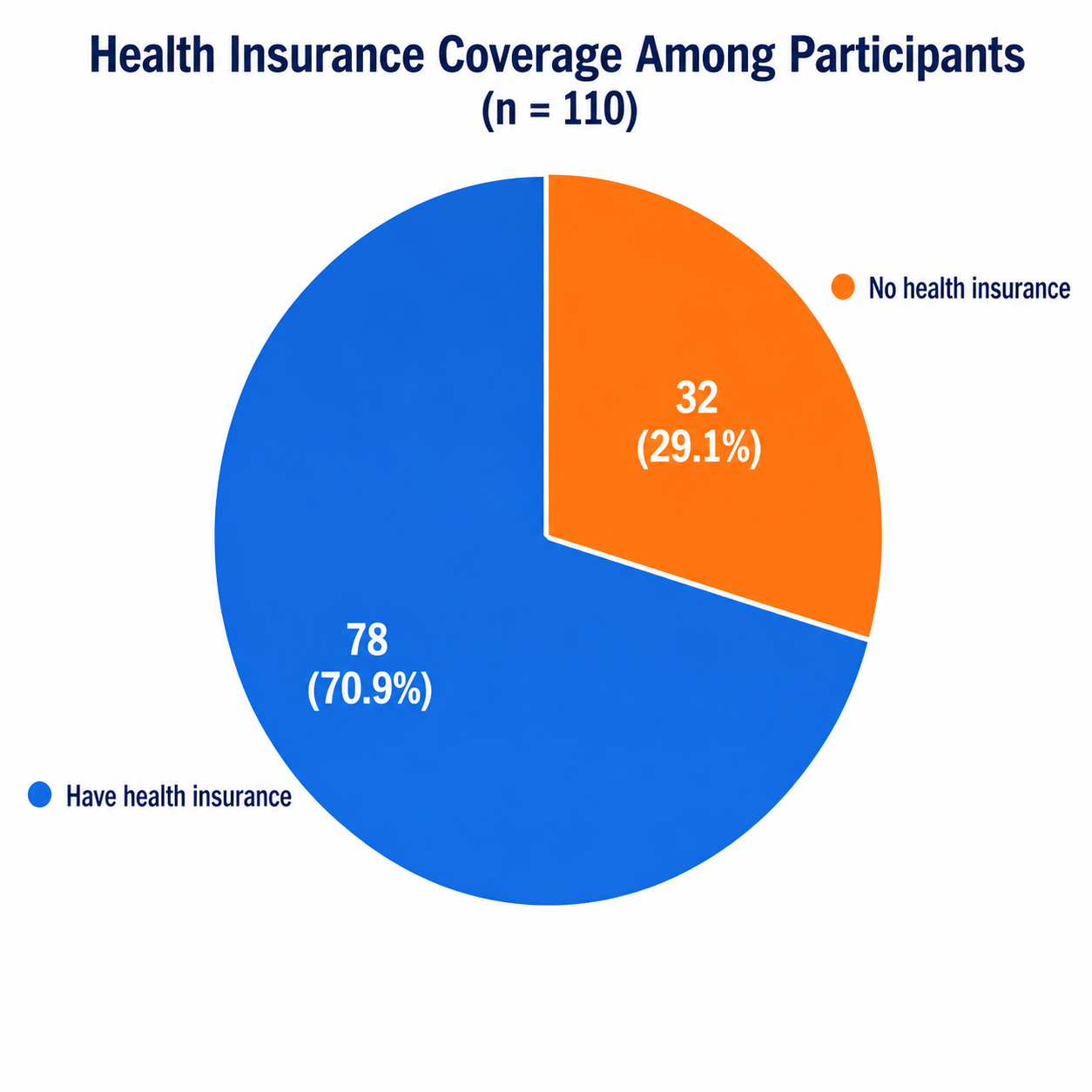
One of the measures examined was health insurance coverage. Among the 110 participants, 78 (70.9%) reported having health insurance, while 32 (29.1%) reported that they did not. Thus, nearly three in ten participants in this subset reported being uninsured. Lack of insurance may create financial or access-related barriers to obtaining regular healthcare and preventive services, highlighting the importance of considering healthcare access alongside the burden of chronic disease.
Community-based strategies may help reduce these barriers. Continued educational events, regular screening reminders, language support for community members with limited English proficiency, and transportation assistance for individuals who do not drive, particularly older adults, may make it easier for community members to access recommended screenings.
As part of our community outreach, we provided participants with information about the Illinois Breast and Cervical Cancer Program, along with a list of locations obtained from the American Cancer Society where individuals may be able to receive mammograms based on their county or area, even if they do not have health insurance. Expanding awareness of similar resources is important, particularly for uninsured individuals who are willing to participate in recommended screenings but may face financial or logistical barriers. Additional community partnerships and resources are needed to help connect uninsured community members with accessible screening services.
Because diabetes was common among participants, diabetes education was an important component of our outreach. Participants were asked whether they knew that having a family history of diabetes can increase their own risk of developing the disease. Following the SICR community event, 76 participants (69%) reported learning this information for the first time. This was one of the most encouraging findings from the outreach. Having a family history of diabetes does not mean that an individual will necessarily develop the disease. However, understanding this risk may encourage individuals to discuss their family history with a healthcare provider, obtain appropriate screening, and take steps to support their overall health.
The most commonly used diabetes medication reported by participants was Metformin. 28 diabetes patients provided additional information about diabetes-related complications. Of these, 14 (50.0%) reported experiencing complications. This finding highlights the importance of awareness of alternative treatment options and ongoing diabetes management approaches to help prevent or reduce diabetes-related complications.
Prevention in Practice: What Screening Data Tell Us
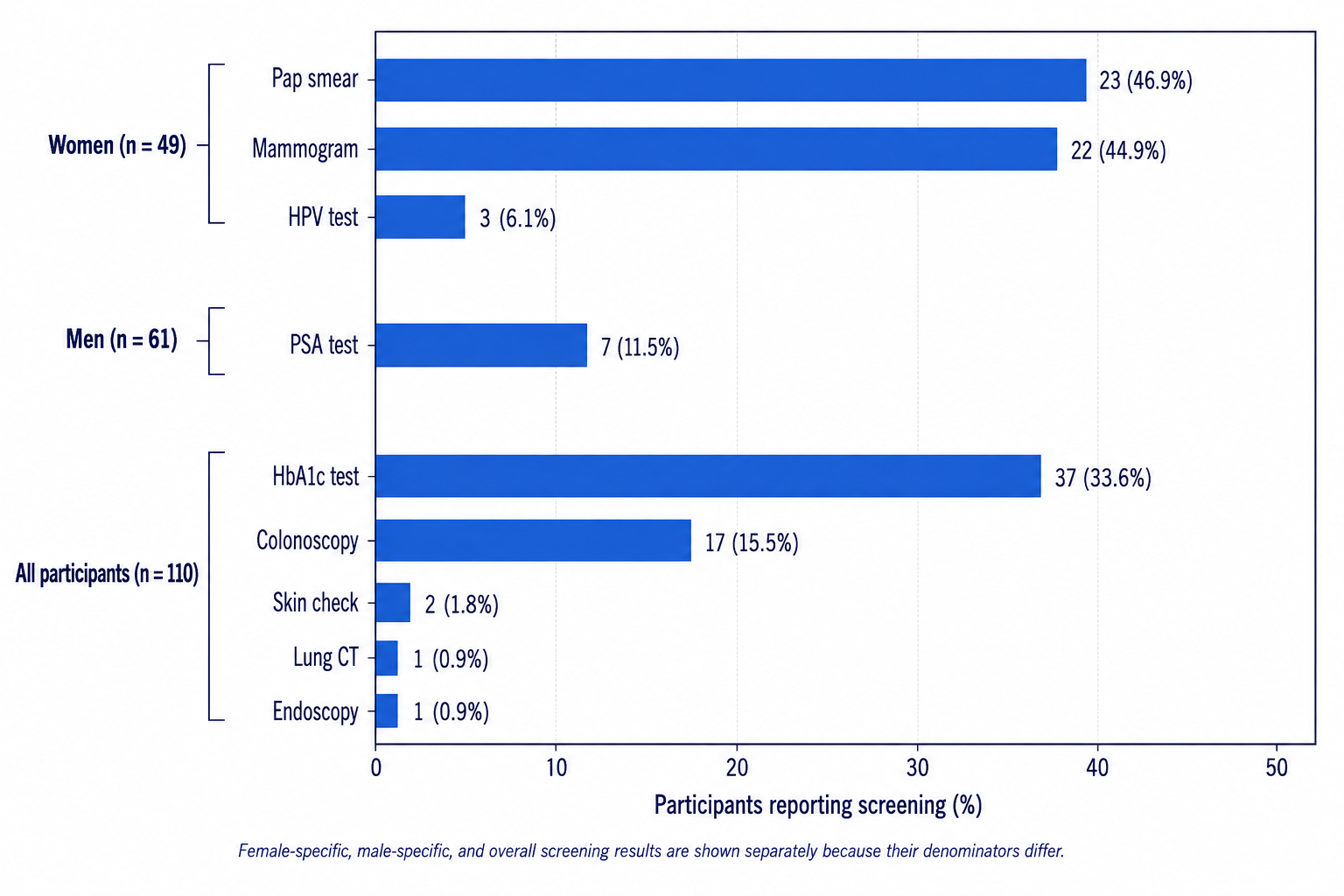
Among the 110 participants for whom screening information was collected, 49 were women, and 61 were men. Among women, 22 of 49 (44.9%) reported having undergone mammograms, while 23 (46.9%) reported receiving a Pap smear. In contrast, only 3 women (6.1%) reported HPV testing.
Screening procedures applicable to both men and women also showed variable participation. Seventeen of 110 participants (15.5%) reported undergoing colonoscopy. HbA1c testing was the most commonly reported screening measure overall, with 37 participants (33.6%) reporting that they had undergone testing. Other preventive services had much lower reported participation, including low-dose CT (LDCT) lung cancer screening in 1 participant (0.9%), skin checks in 2 participants (1.8%), and endoscopy in 1 participant (0.9%). Among men, 7 of 61 (11.5%) reported having undergone PSA testing.
These findings suggest opportunities to strengthen awareness and participation in preventive screening. Early detection can improve the management of many conditions, but appropriate screening depends on factors such as age, sex, personal health history, and individual risk. Encouraging participants to understand their risk factors and discuss recommended screening options with a healthcare professional may help support earlier detection and better health outcomes.
Preventive Screening Reported Among Participants
Clinical Research Education
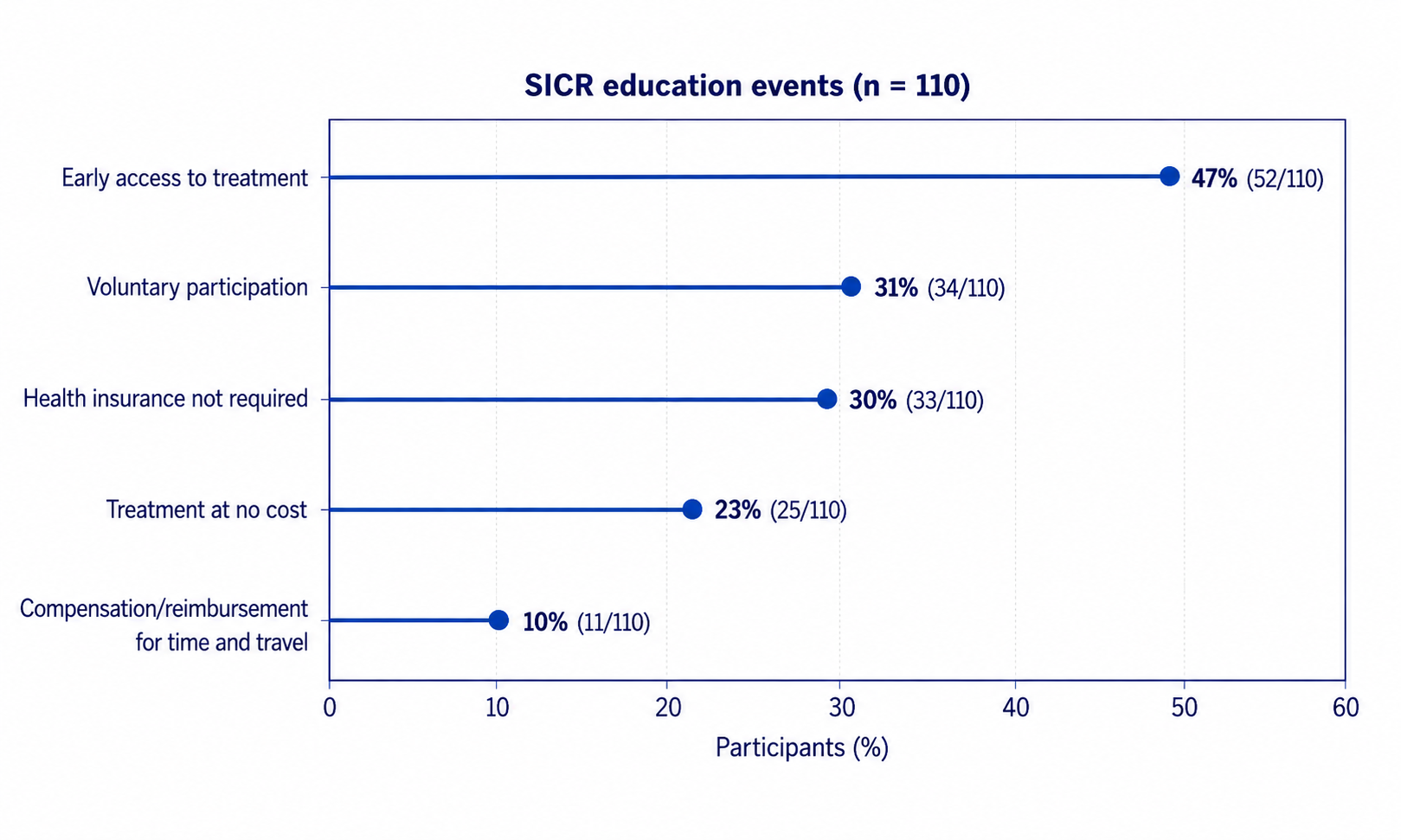
SICR is working to improve clinical research literacy so that community members better understand their care and treatment options and can make informed decisions about their health. Participants reported learning about several aspects of clinical research. When asked what they considered the best thing they learned, the most common response was that clinical research may provide opportunities for early access to investigational treatments or interventions, selected by 52 of 110 participants (47%). Other participants identified learning that participation in clinical research is voluntary (34, 31%), that health insurance is not necessarily required to participate (33, 30%), and that treatment can be provided at no cost (25, 23%). Additionally, 11 participants (10%) identified learning that studies may provide compensation or reimbursement for time and travel. These findings show that participants gained knowledge across multiple aspects of clinical research, with early access to investigational treatments or interventions emerging as the most frequently selected best thing they learned.
Together, these findings and distribution of SICR educational resources highlight the value of clinical research education in helping community members understand how research works, what participation may involve, and what questions they may want to ask before deciding whether a study is right for them. Improving research literacy can help individuals make more informed and confident decisions about participation in clinical research.
Best Thing Participants Learned About Clinical Research
Looking Ahead
The findings from these community events highlight both progress and areas where continued work is needed. Chronic diseases such as diabetes and cardiovascular disease remain important health concerns, while gaps in preventive screening, insurance coverage, and health & research awareness persist. For some community members, lack of health insurance may also create barriers to accessing preventive screenings and other healthcare services.
At the same time, the findings demonstrate the potential value of community education. When people learn about their family health risks, understand the importance of appropriate screening, and become more familiar with clinical research, they may be better prepared to ask questions and make informed decisions about their health. Moving forward, SICR will continue to strengthen these efforts by bringing simple, trusted, and culturally relevant health information directly into the community.
Understanding a community’s health needs, concerns, and knowledge gaps can help make healthcare education and clinical research more accessible and relevant to the people they are intended to serve. Community engagement should begin long before someone becomes a patient or is approached about participating in a clinical trial. By creating trusted spaces for education, listening to community voices, and making health information easier to understand, stronger relationships can be built over time. The collaborations with industry partners can support earlier awareness, better-informed healthcare decisions, greater understanding of clinical research, and more inclusive participation in future research. Ultimately, this work can help ensure that advances in healthcare reach and reflect the communities they are designed to benefit.
~ Ekta Grewal
(Founder, Sikhs in Clinical Research)

